Week Twenty: The Death of the Author
A year before The Death of the Moth was published, Virginia Woolf committed suicide by putting rocks in her pockets and walking into a river near her home. After struggling from depression and bipolar disorder for many years, Woolf made multiple suicide attempts and ended her own life in 1941. But was it a coincidence that she wrote about death at around the same time she committed suicide?
In her piece, Woolf describes the moth as a "pathetic" creature that is living to his full potential as it is "dancing and zigzagging" around the room, flying from one corner to another. Once the moth settles on a window, Woolf realizes that the moth is now unable to "resume dancing" because he "[didn't] have a chance against death." As the moth helplessly flutters his wings and makes his last attempt at survival, his struggles eventually came to an end as he "now knew death."
Woolf, similarly, seems to be making her last attempt at survival by writing this piece about a "pathetic" creature trying its best to stay alive. She explains in her suicide note that after "going mad" several times, she is unable to "go through another of those terrible times." Woolf fluttered her own wings and tried to live to her own potential like the moth did, but her life came to an end, as "death [was] stronger than [she was]."
Although Woolf did write a separate suicide note, it seems to me as if The Death of the Moth was also a piece that foreshadowed her own death - Woolf may have been comparing her life to that of a helpless creature that is weaker than death - so no, perhaps it wasn't a coincidence that she wrote this piece before she committed suicide.
Woolf's suicide note:
Dearest,
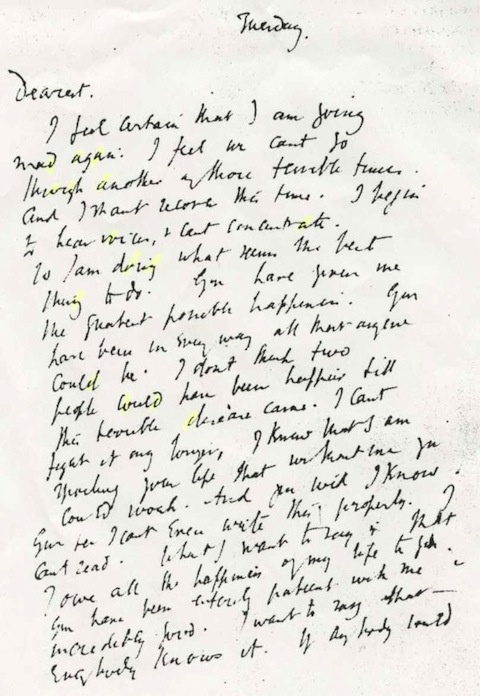 I feel certain I am going mad again. I feel we can't go through another of those terrible times. And I shan't recover this time. I begin to hear voices, and I can't concentrate. So I am doing what seems the best thing to do. You have given me the greatest possible happiness. You have been in every way all that anyone could be. I don't think two people could have been happier till this terrible disease came. I can't fight any longer. I know that I am spoiling your life, that without me you could work. And you will I know. You see I can't even write this properly. I can't read. What I want to say is I owe all the happiness of my life to you. You have been entirely patient with me and incredibly good. I want to say that - everybody knows it. If anybody could have saved me it would have been you. Everything has gone from me but the certainty of your goodness. I can't go on spoiling your life any longer.
I don't think two people could have been happier than we have been.
Wow. I had no idea Woolf had written a suicide note. I also completely understood how perhaps Woolf's piece had an underlying message that foreshadowed her suicide. Good blog!
ReplyDelete